


Richmond Snow Removal Isn’t Just About Snow: The Ice Risk Strata Councils Miss Until It Is Too Late

Updated: Jul 27

Only Strata Snow Removal: The Real Risk Starts After Snow Looks Gone
Richmond strata councils often think winter service is about removing snow from visible surfaces.
That is only part of the job.
In Richmond, the bigger risk often appears after the snow has been cleared, when wet surfaces, coastal moisture, wind exposure, shaded corners, and overnight temperature drops combine into black ice. A walkway may look fine. A parkade ramp may look wet. A lobby entrance may seem clear enough. But once that moisture freezes, the property can become dangerous fast.
That is why Only Strata Snow Removal fits this topic so closely. Strata properties need winter service that understands shared access, repeated foot traffic, resident safety, documentation, and follow-up treatment. A strata-only focus, strict capacity limits, GPS/photo service logs, proactive dispatch, large salt reserves, cancellation flexibility, reliable winter response, and a damage repair guarantee all support better ice management.
For Richmond buildings, snow removal should never stop at what is visible.
Richmond Snow Removal Services Need To Focus on Black Ice First
Good Richmond snow removal services should treat black ice as a priority risk, not a rare surprise.
Black ice is dangerous because residents often do not see it until they step on it. It can form on walkways, ramps, stair landings, lobby entrances, curb crossings, visitor parking paths, and exposed sidewalks. It is especially common where water collects, drains slowly, or sits on smooth concrete.
Parkade ramps are high-risk surfaces
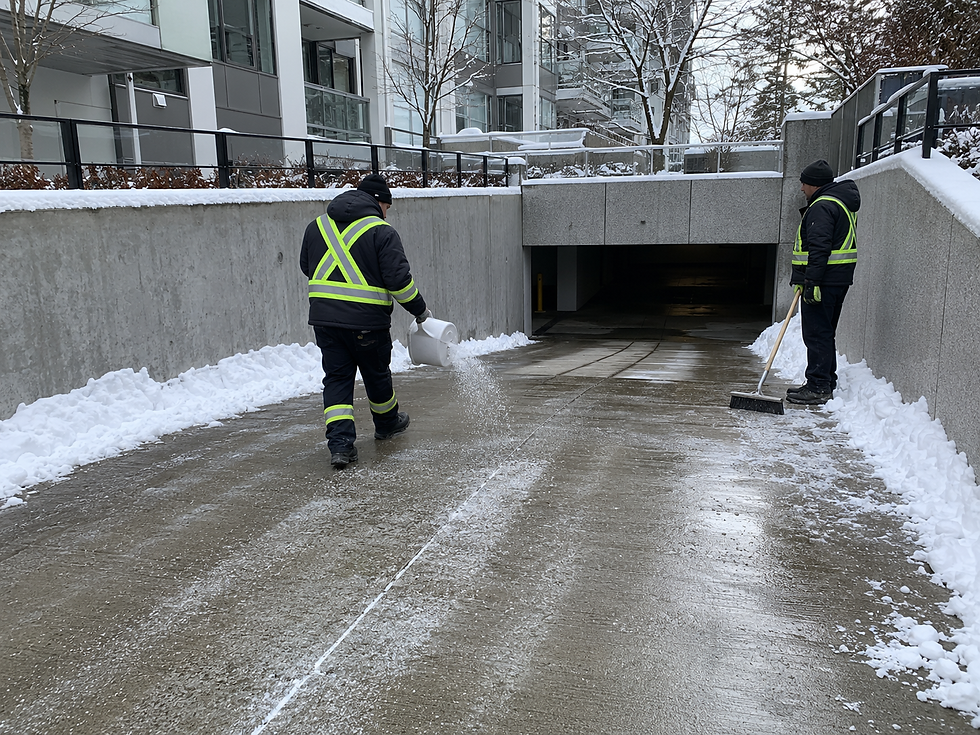
Parkade ramps create a serious winter problem because they combine slope, moisture, shade, and vehicle traffic. Cars carry water inside and out. Tires compact slush. Meltwater can run down the ramp and freeze near the bottom. Even a thin layer of ice can make traction difficult for vehicles and unsafe for pedestrians.
Lobby entrances need more attention than they get
Lobby entrances often receive snow tracked in from outside. Mats get wet. Doorways stay damp. Water collects where residents pause, turn, or step from one surface to another. If the outside entrance area freezes overnight, the first residents leaving in the morning may face the worst conditions of the day.
This is where ice management becomes just as important as plowing.
Snow Removal in Vancouver Shows Why Wet Surfaces Refreeze Fast
The same issue appears with snow removal in Vancouver, where coastal winter weather often creates more slush and wet pavement than deep snow.
Richmond has similar challenges. Wet surfaces can be deceptive because they look less urgent than snow. A strata council may think the site is safe because the walkway is clear. But if that walkway is wet and temperatures drop, the property may be moving toward a slip risk without obvious warning.
This matters around shaded walkways, north-facing paths, breezeways, parkade entrances, exterior stairs, accessible ramps, garbage areas, and mailbox zones. These are everyday routes, not optional spaces. Residents use them in the morning, after work, in the rain, in the dark, and while carrying bags or helping children.
A good winter plan should include follow-up checks after clearing. It should also define when salt or de-icer is applied, which areas receive early treatment, and which surfaces need special attention after wet weather.
Snow clearing handles the obvious problem. Ice management handles the problem residents may not see coming.
Snow Removal in Delta Proves Salt Timing Can Change the Outcome
Snow removal in Delta shows the same coastal freeze-thaw pattern that Richmond strata properties need to take seriously.
Salt timing matters. If material is applied too late, ice may already be bonded to the surface. If it is applied randomly, high-risk areas may still fail. If the property runs short during a regional event, crews may not be able to treat the areas that need attention most.
Pre-treatment should target first-fail zones
First-fail zones are the parts of the property most likely to become slippery first. In Richmond, these often include parkade ramps, lobby entrances, shaded sidewalks, exterior stairs, mailbox areas, garbage routes, accessible ramps, and wind-exposed corners.
Salt should support the service plan, not replace it
Salt is not a complete winter plan by itself. It works best when connected to clearing, drainage awareness, refreeze monitoring, and documentation. On some surfaces, traction support may also be needed when ice is already present or temperatures reduce salt effectiveness.
The point is not to spread more material everywhere.
The point is to apply the right treatment in the right place at the right time.
Lower Mainland Snow Removal Service Zones Affect Richmond Response
Strata councils should also understand how Lower Mainland snow removal service zones affect winter reliability.
Richmond, Vancouver, Delta, Surrey, Burnaby, and nearby communities can all face the same freeze event at the same time. When that happens, every property wants attention. The contractors with loose routing, weak capacity planning, or limited salt supply fall behind quickly.
This is why strict capacity limits matter. A provider that accepts too many properties may not be able to deliver timely follow-up service when refreeze conditions hit multiple cities at once.
For Richmond strata councils, the question is not only, “Can someone clear snow?” The better question is, “Can the property be checked, treated, documented, and supported when ice risk continues after the first pass?”
That is the difference between basic service and professional winter management.
The Strata Council Checklist: Walkways, Ramps, Entrances, and Proof
Richmond strata councils can reduce winter complaints by building a simple ice-risk checklist before the season begins.
The checklist should include parkade ramps, lobby entrances, main walkways, exterior stairs, accessible ramps, visitor parking paths, mailbox zones, garbage access, exposed sidewalks, drainage areas, and shaded corners. These areas should be mapped, prioritized, and reviewed after each major weather event.
Documentation helps protect the council
GPS logs, photo records, weather notes, and treated-area reports help property managers confirm what was done. Documentation also helps identify repeat problem zones. If the same ramp freezes after every event, the plan needs to change. If the same entrance stays wet, drainage or treatment timing may need review.
Communication reduces resident complaints
Residents complain less when they know what is happening. A simple notice can explain which areas are prioritized first, when follow-up treatment may happen, and how residents should report a dangerous icy area.
Richmond snow removal is not just about snow because Richmond winter risk is not just about accumulation.
It is about moisture, refreeze, wind exposure, ramps, entrances, walkways, and the surfaces residents trust every day.
The strata properties that handle winter best are not the ones that wait for snow to look serious. They are the ones that plan for ice before it becomes obvious.


Comments