
Abbotsford Snow Clearing for Strata Properties: What To Lock In Before the Forecast Turns Ugly
- Mikhail M.
- Jul 21
- 4 min read

Updated: 5 days ago

Only Strata Snow Removal: Why Readiness Starts Before the First Call
The biggest winter mistake strata councils make is waiting until the forecast looks serious.
By then, good contractors may already be fully routed, salt demand may already be rising, and the property may already be behind. For Abbotsford strata properties, winter risk is not only about heavy snow. It is also about wet pavement, slush, overnight refreeze, shaded walkways, ramps, and common areas that residents depend on every day.
That is where Only Strata Snow Removal fits naturally into the conversation. Strata properties are not simple driveways. They include shared sidewalks, visitor parking, ramps, waste areas, internal lanes, entrances, stairs, and routes used by residents with different mobility needs.
A strong winter plan should be locked in before the first ugly forecast. The council should know what will be cleared, when crews will respond, how salting will be handled, and how the work will be documented.
Abbotsford Snow Removal Services Should Define Common Areas First
Good Abbotsford snow removal services should start with a clear map of the site.
That means identifying every surface that matters before winter begins: walkways, ramps, visitor parking, garbage areas, fire access points, mail routes, building entrances, internal lanes, and shared pedestrian paths.
Walkways and ramps need early priority
Walkways and ramps often become risky before the rest of the property looks serious. A sloped ramp can lose traction quickly. A shaded sidewalk can hold ice longer than an open parking area. A short path between visitor parking and the entrance can create more concern than a large surface residents rarely use.
Garbage areas and visitor parking cannot be ignored
Garbage areas, recycling zones, visitor stalls, and access lanes are easy to treat as secondary. That is a mistake. Residents, contractors, delivery drivers, and service vehicles still need those areas during winter weather.
Better planning means deciding these priorities before snow starts falling, not while residents are already reporting problems.
Snow Removal in Langley Shows Why Trigger Depths Matter
The same winter planning lesson applies to snow removal in Langley: vague service expectations create avoidable gaps.
A strata contract should define when service begins. Trigger depths matter because they remove confusion. If the agreement says crews respond only after a certain accumulation, councils should understand exactly what that means for sidewalks, ramps, drive aisles, and salting.
Snow depth is not the only trigger that matters. Freezing rain, overnight temperature drops, and wet slush can create risk even when snow accumulation looks minor. A property can look clear enough in the evening and become slick by morning.
That is why trigger language should include snow, ice, refreeze, and high-risk surfaces.
A council should not be forced to debate whether conditions are “bad enough” while residents are already navigating icy routes.
Snow Removal in Mission Proves Salting Expectations Should Be Clear
Planning for snow removal in Mission also shows why salting expectations should never be left vague.
Salt and de-icing work are not just add-ons. On strata properties, they are part of keeping the site usable after snow is moved. Clearing removes accumulation, but salting helps manage the surface that remains.
Salting should match the property layout
Entrances, shaded walkways, ramps, curb crossings, stairs, visitor parking connections, and garbage access routes may need different attention than open vehicle lanes. A one-size salting approach can miss the places where ice returns first.
Salt supply should be discussed before winter
A contractor’s response depends partly on material availability. During a regional storm, salt demand can increase quickly. Councils should ask whether the contractor has enough reserve material and how salting decisions are made during back-to-back events.
Good salting expectations make the winter plan more predictable. They also reduce the chance of arguing about what should have been done after the property is already slippery.
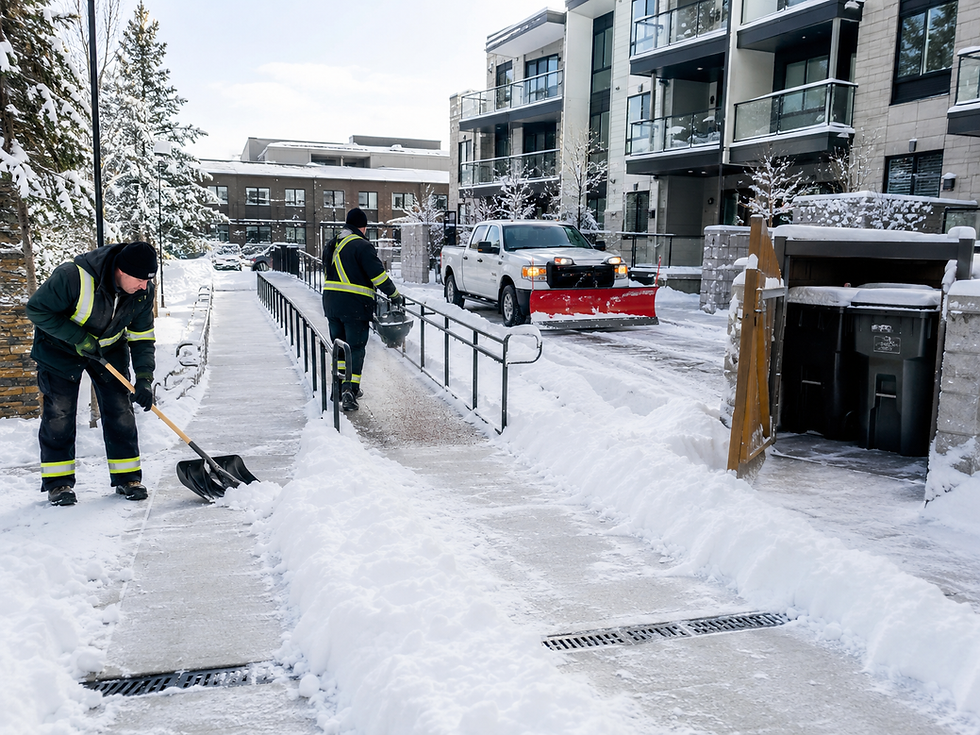
Lower Mainland Snow Removal Service Zones Affect Response Windows
Strata councils should also think beyond Abbotsford.
Lower Mainland snow removal service zones can become strained during the same weather event. Abbotsford, Langley, Mission, Chilliwack, Surrey, and nearby communities may all need service at once when cold air and snow move through the region.
That matters because response windows are only realistic when the contractor’s route capacity is realistic.
A provider that accepts too many sites may sound helpful during quoting season, but winter exposes overbooking quickly. Response windows should be tied to actual route planning, crew availability, salt supply, and equipment readiness.
This is one reason contracts beat on-demand calls. With an on-demand approach, the property is competing for attention after the problem has already arrived. With a contract, the property is already part of the route plan.
For strata councils, that difference can decide whether the site receives timely service or waits while conditions worsen.
Why Contracts Beat On-Demand Calls Before the Forecast Turns Ugly
On-demand snow removal can look flexible until everyone needs it at the same time.
Then it becomes a gamble.
A contract gives the council clearer expectations. It defines service scope, trigger depths, response windows, salting expectations, priority zones, documentation, snow pile locations, and communication rules. It also gives crews the chance to understand the property before winter pressure begins.
Only Strata Snow Removal’s strata-only focus, strict capacity limits, GPS/photo service logs, proactive dispatch, large salt reserves, reliable winter response, cancellation flexibility, and damage repair guarantee all support a more controlled winter plan.
That control matters on Abbotsford strata properties because winter problems often begin in common areas: a slick walkway, a ramp that refreezes, a blocked visitor stall, a garbage area that becomes hard to reach, or an internal lane where snow was pushed into the wrong place.
A stronger contract should answer practical questions before the first storm:
Which areas are cleared first? What triggers service? What response window applies? When is salting included? Where can snow be piled? How will work be documented? Who receives service updates?
Those answers are the real readiness checklist.
Abbotsford snow clearing for strata properties should never depend on a last-minute call after the forecast turns ugly. By then, the property is already reacting. A prepared council locks in the contract, maps the site, confirms salting expectations, and documents winter readiness before the first freeze has the chance to turn small gaps into serious complaints.


Comments