


Snow Removal Trigger Depth: Why a 2-Centimetre Rule Can Still Leave a Property Icy
- Mikhail M.
- Aug 6
- 5 min read


Langley Strata Winter-Service Options Should Look Beyond Accumulation
Langley strata winter-service options often start with one simple question: “At what snow depth should crews come?”
That is understandable. A snow removal trigger depth gives councils something measurable. It sounds fair, clean, and easy to manage. If snow reaches two centimetres, service starts. If it does not, crews wait.
But winter does not always follow neat contract wording.
A property can be icy before it reaches two centimetres of snow. Freezing rain can coat ramps and sidewalks without creating much accumulation. Wet snow can melt during the day and refreeze overnight. Vehicle traffic can pack a light dusting into a slick surface. Shaded paths can stay frozen long after open pavement looks wet.
That is why a snow service threshold should not rely on depth alone. For strata properties, the real issue is access. Residents need to leave safely, enter the building, reach parking, use sidewalks, and move through shared areas without guessing which surface has turned slippery.
Only Strata Snow Removal works with a strata-only focus because shared residential properties need more than basic storm response. They need practical trigger rules that reflect how residents actually use the site.
A 2-Centimetre Trigger Can Miss Ice
A 2-centimetre trigger may work for plowing decisions, but it can miss ice-control needs. If the pavement is already below freezing, even light moisture can become a problem.
Ground Conditions Should Count Too
The ground matters as much as the sky. Cold pavement, shaded entrances, ramps, and compacted foot traffic can create risk before snow depth looks serious.
Complete Lower Mainland and Fraser Valley Service Area Conditions Change Fast
A complete Lower Mainland and Fraser Valley service area does not experience winter evenly.
One community may get wet snow. Another may get freezing rain. A coastal property may deal with slush, while an inland property may stay frozen longer. Even within one city, elevation, shade, wind exposure, drainage, and surface material can change the result.
That is where a snow service threshold becomes more complicated.
A simple number can help crews make decisions, but it should not be the only decision point. A property with flat open pavement may tolerate a light snowfall better than a shaded townhouse lane or parkade ramp. A site with poor drainage may need treatment after meltwater starts moving. A high-foot-traffic entrance may need salting before the main lot reaches the trigger.
For strata councils, the best winter plan defines several triggers: snow accumulation, temperature, freezing rain, known refreeze risk, resident access needs, and site-specific problem areas.
Only Strata Snow Removal supports that with proactive dispatch, large salt reserves, GPS/photo service logs, and strict capacity limits. These details matter when conditions change quickly and crews need to respond before the property becomes difficult to use.
Snow Removal Has a Dispatch Problem — And It’s Costing Millions Reports Only Strata Snow Removal
Snow Removal Has a Dispatch Problem — And It’s Costing Millions Reports Only Strata Snow Removal because many properties still wait for obvious accumulation before acting.
That delay can be expensive. Once snow has been compacted by tires and foot traffic, it becomes harder to remove. Once moisture freezes, salting may require more material and more time. Once residents begin reporting icy areas, the property is already behind.
A better dispatch model does not wait for every surface to look bad.
It uses weather timing, pavement temperature, site history, and priority routes. If freezing rain is expected, crews may need to treat surfaces before snow piles up. If temperatures are dropping after daytime melt, a refreeze check may matter more than plowing. If a site has a steep ramp or shaded entrance, the trigger should account for that.
This is where documentation becomes useful. GPS/photo service logs show what crews saw, when they arrived, and which areas were treated. Over time, those records help identify the places where a 2-centimetre trigger is not enough.
The goal is not to over-service every property. The goal is to avoid waiting for the wrong signal.
Related Winter Conditions in Surrey Show Why Ice Can Beat the Trigger
Related winter conditions in Surrey show why snow depth is only one part of the story.
Surrey strata properties often deal with mixed conditions: wet snow, rain, slush, shade, traffic, and overnight freezing. A sidewalk may look wet at 4 p.m. and become slick by 7 a.m. A parking area may be clear after plowing but icy near drains or curb edges. A ramp may need treatment even when the rest of the property looks manageable.
Refreeze Can Happen After Clearing
Snow removal can expose pavement, but it can also leave meltwater behind. If that water drains across a walkway and freezes, the site can become icy after the main work is done.
Foot Traffic Can Create Slick Spots
Entrances, mail areas, garbage routes, and parking paths collect compacted snow quickly. Even small amounts can become polished and slippery when people keep walking over them.
This is why a snow service threshold should include follow-up logic. A first visit may clear accumulation. A second check may prevent the actual hazard.
Nearby Winter-Service Coverage in Abbotsford Reinforces the Need for Flexible Triggers
Nearby winter-service coverage in Abbotsford adds another lesson: some properties need earlier attention because conditions can stay colder or wetter for longer.
A fixed snow removal trigger depth may seem consistent, but consistency is not always the same as safety. If the property has shaded sidewalks, exposed parking areas, or drainage that crosses pedestrian routes, waiting for two centimetres may be too late.
Flexible triggers do not mean unclear service. They mean better-defined service.
A strong contract can still be specific. It can say crews respond at a certain snow depth, and also respond for freezing rain, refreeze risk, ice complaints, temperature drops, and known high-risk areas. It can define which surfaces receive priority and how visits are documented.
Only Strata Snow Removal’s reliable winter response and large salt reserves help support those trigger decisions when multiple properties need service at the same time.
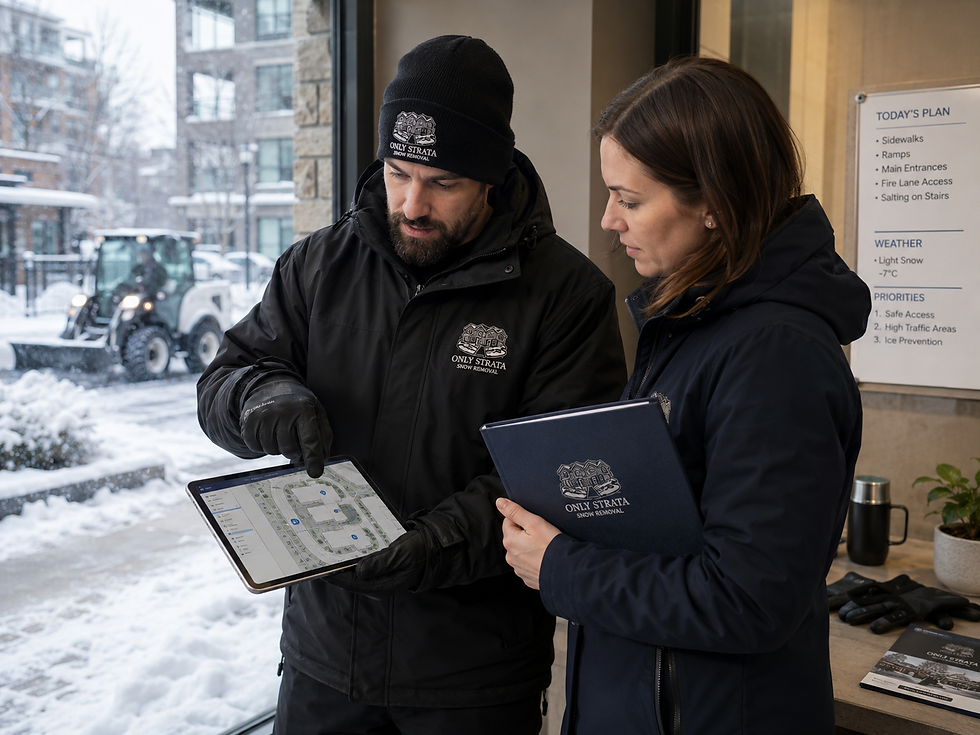
A Better Snow Service Threshold Uses Conditions, Not Just Centimetres
A snow removal trigger depth is useful, but it should never be the whole winter plan.
For strata councils, the better question is not only, “How many centimetres before service begins?” It is, “What conditions make our property unsafe or difficult to use?”
That answer may include two centimetres of snow. It may also include freezing rain, wet pavement before a cold night, shaded walkways, icy ramps, compacted foot traffic, and repeated refreeze zones.
Only Strata Snow Removal helps strata properties plan around real access, not just numbers in a contract. With a strata-only focus, proactive dispatch, service logs, strict capacity limits, salt readiness, cancellation flexibility, and a damage repair guarantee, the service model is built for practical winter operations.
A 2-centimetre trigger can sound precise.
But if the property is already icy, precision is not enough.


Comments