


Salt Charges Snow Removal Contract Warning: Who Actually Pays for Extra Salt Before the Ice Shows Up?
- Mikhail M.
- Aug 7
- 5 min read

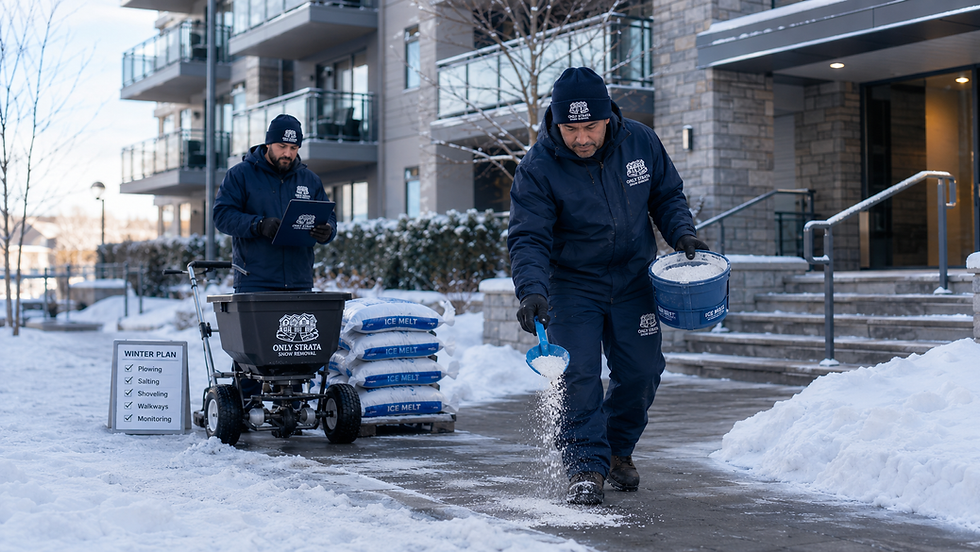
Winter-Service Planning for Abbotsford Properties: Start With the Salt Clause
Winter-service planning for Abbotsford properties should never treat salt as a small detail hidden near the end of a snow contract.
It is often one of the first things residents notice when winter conditions turn messy. A sidewalk can be plowed and still feel slick. A parking area can look clear and still need deicer. A ramp can be open, but not usable without proper ice control.
That is where salt charges snow removal contract language becomes important.
Many strata councils focus on the main service price. They compare seasonal rates, per-visit costs, trigger depths, and response windows. Then winter arrives, and the invoice includes material charges the council did not fully expect.
The question is simple: is deicer included in snow contract pricing, or is it billed separately every time crews apply it?
That answer should be clear before signing. If the contract says salt is “as required,” “available,” or “billed as used,” councils need to know what that means in real numbers. Does the price include a material allowance? Are there replenishment fees? Is there a per-bag, per-application, or per-ton charge? Who approves extra material during an active storm?
Only Strata Snow Removal works with strata properties where shared entrances, ramps, sidewalks, visitor parking, and internal roads all depend on reliable ice management. Salt is not an afterthought. It is part of winter access.
Complete Lower Mainland and Fraser Valley Service Area Pricing Needs Material Clarity
Complete Lower Mainland and Fraser Valley service area planning is difficult because winter conditions do not land evenly.
One site may need light salting after wet snow. Another may need repeat applications because temperatures keep dropping overnight. A shaded townhouse lane may stay icy longer than an open parking area. A strata in a colder inland pocket may use more deicer than a coastal site during the same weather system.
This is why material clarity matters across the complete Lower Mainland and Fraser Valley service area.
A contract that looks affordable in October can become confusing in January if salt use is not defined. Councils may assume salting is included because “snow and ice service” sounds complete. Contractors may assume salt is a separate material cost because the agreement allows pass-through charges.
Neither side wants that argument during freezing rain.
Material Allowances Should Be Written Clearly
A good contract should explain whether a certain amount of salt or deicer is included. If there is an allowance, the council should know what happens after that amount is used.
Approval Rules Matter During Active Weather
If extra salt requires approval, who gives it at 5 a.m.? If approval is not required, what prevents surprise invoices? The contract should answer both questions before the first storm.
The Importance of Road Salt Supply for Reliable Snow Removal
The Importance of Road Salt Supply for Reliable Snow Removal becomes obvious when multiple properties need treatment at once.
Salt supply affects response. If a contractor runs low, ice control becomes reactive. Crews may prioritize only the worst areas, delay follow-up treatment, or charge premium material rates when supply tightens. That can leave councils dealing with both access complaints and invoice questions.
Only Strata Snow Removal maintains large salt reserves because reliable winter service depends on having material ready when conditions change. This matters for strata properties, where one icy entrance or parkade ramp can affect dozens of residents.
The question is not only “How much does salt cost?”
The better question is “How is salt planned, stocked, applied, tracked, and billed?”
A strong winter agreement should explain where deicer applies first. Main entrances, stairs, ramps, sidewalks, garbage access, visitor parking routes, and high-traffic pedestrian paths may need priority. It should also explain whether repeat salting after refreeze is included or charged separately.
Deicer Included in Snow Contract Pricing Should Not Be Assumed
If deicer is included in snow contract pricing, the contract should say so. If it is not included, the pricing method should be transparent.
Salt Use Should Match Site Risk
A flat property may need less material than a shaded, sloped, or high-traffic site. The contract should reflect the property’s actual winter risk.
Related Winter Conditions in Mission Show Why Salt Use Can Change Quickly
Related winter conditions in Mission show why salt charges can change faster than councils expect.
A property may begin with light snow, then shift into slush, then refreeze overnight. Hillside access, shaded walkways, and parkade ramps may need treatment more than once. If a contract only includes one application, the council may face extra charges just when service matters most.
This does not mean every extra salt charge is unfair. Materials cost money. Crews should be paid for legitimate work. The problem is surprise.
Strata councils need to know how extra deicer is handled before weather becomes urgent. A fair contract should define included materials, extra material pricing, application priorities, approval expectations, and documentation.
GPS/photo service logs help here. They can show where salt was applied, when crews attended, and which surfaces required treatment. That makes material charges easier to understand and easier to defend if residents ask questions.
Nearby Winter-Service Coverage in Chilliwack Highlights the Risk of Heavy Use
Nearby winter-service coverage in Chilliwack adds another useful example: colder or heavier winter conditions can increase material demand.
When storms affect multiple communities, salt usage rises quickly. If the contractor did not plan supply properly, pricing pressure can appear. Councils may see surcharges, material add-ons, or delayed applications.
This is why contract language should connect salt use to operations, not just billing.
Only Strata Snow Removal supports winter response with strict capacity limits, proactive dispatch, large salt reserves, reliable winter response, and GPS/photo logs. Those advantages help reduce the chaos that often causes surprise charges.
A council reviewing a contract should ask practical questions. Is salt included? Is there a cap? What surfaces are treated first? Are refreeze checks included? Are photos provided? What happens if the property needs extra material after repeated freeze-thaw cycles?
These questions are not technicalities. They decide whether the winter budget is predictable.

Only Strata Snow Removal: Better Contracts Make Salt Costs Easier to Trust
Only Strata Snow Removal brings a strata-only focus to winter service because strata sites have different needs than standard commercial lots or single-family driveways.
Residents share the same access points. Ice complaints arrive quickly. Council decisions are scrutinized. Property managers need records, not vague explanations. That is why salt charges snow removal contract wording should be reviewed carefully before approval.
A stronger contract makes the material section plain. It explains whether deicer is included in snow contract pricing. It defines extra salt charges. It lists priority areas. It documents service. It gives councils enough information to understand what they are paying for.
Only Strata Snow Removal also offers cancellation flexibility and a damage repair guarantee, which adds another layer of confidence when councils are comparing winter-service partners.
The cheapest quote is not always the clearest quote.
Before signing, councils should read the salt clause closely. Extra salt may be necessary. Surprise salt charges should not be.


Comments